Go to the Recipe: Super-Juicy Butterball Rotisserie-Style Chicken
We hear you—your concerns are valid, and legitimate. Exposure to high doses of STPP is indeed associated with a range of health conditions/complications, despite its GRAS designation by the FDA when used at proper concentrations. The truth is, the industry has been injecting birds with STPP and a whole range of other moisture-retaining additives for decades, not just now.
This brings me to a larger discussion around the use of additives and food safety: Namely, if you take issue with the use of STPP in this recipe, then you (or any other eagle-eyed, health-conscious reader) will likely also take issue with many other recipes in our catalog that leverage a vast roster of additives, including:
-Hydrocolloids in many of our recipes (carrageenan in particular has been in the recent spotlight for claims that it disrupts gut health/promotes inflammation)
-Nitrite salts for curing (Prague Powder #1) are associated with exposure to carcinogenic nitrosamines, as well as other health risks at elevated and regular levels of consumption
-Sodium Hexametaphosphate in melting cheeses (similar concern with phosphate intake)
My job is not to make public health decisions for other people, nor do I have a moral imperative (or the medical/academic credentials) to say, "this is categorically bad for you". But I do believe three things:
1. Often, the dose and frequency of exposure make the poison. Moderation and discretion are paramount to healthy consumption.
2. As a development chef, my job is to show and explain why things work, to devise precise solutions to sometimes complex cooking problems or ideas. I'd argue that sharing those solutions (even knowing and acknowledging any associated health implications) is empowering to the cook/reader purely from an educational and cooking-literacy perspective.
3. That armed with that kind of literacy, a cook/reader can take informed, calculated risks in their own cooking if they want to. Because understanding how and why things work in food and cooking—even if those things might be "bad", from the dirt to your plate—is one of the most powerful ways to take agency over what you eat.
YES! James this is so good to hear, Tim worked hard on this recipe!
This was probably the best chicken I’ve ever eaten. One observation, and I’m not sure if this is a common side effect of STPP, is that my wife reported me muttering “moist moist chicken” repeatedly in my sleep…
In my opinion, the use of STPP is precarious. Although rare, increasing phosphates in the human diet can cause a variety of issues. including vascular damage. It has also been linked to aging. Many folks do not know exactly what they are eating, and many do not pay attention to ingredients. I find it tongue-in-cheek that, as trends today are toward chemical-free and natural ingredients. We are now purposely adding them for juiciness and flavor. SMH
Third time making this recipe. First two were wet brine. This was the first with injection. Perfect method as written! Thanks Tim! Have to say the injection is the best for the overall finish flavor and the skin.. But the wet brine is also great. I still want to give a try finishing on the rotisserie.
Just a tip: You should make an edit update that changes "If using an immersion brine, skip the overnight air dry."
To:
If NOT using an immersion brine, skip the overnight air dry.
Thank you so much for the response! I'm going to start playing around with thickeners in my poultry brines. (I do have a cheap vacuum tumbler, but it doesn't seem to do much)
Modified starch and carrageenan improve the perception of juiciness/tenderness in meats, but the mechanisms differ from phosphates. In either case, you're increasing the viscosity of the brine injected (or vacuum tumbled, in the case of some commercially brined products), which leads to a more gelatinous or "fatty" quality when you bite into the meat. With the increased viscosity, there's less chance that the brine runs off with each bite (which over subsequent bites might contribute to the perception of dryness).
Here's a fun test which demonstrates the effect. I tested a little bit into injecting the suggested 80/20 blend of kappa/iota, and had some promising results, but couldn't arrive at a consistent method for poultry. At worst, I saw significant pooling in the intramuscular space between the tenderloin and the breast, which resulted in an opaque, gelatinous mass (I know, yum) in the middle of the breast (the other parts of the meat were really juicy and tender). I suspect my proportions were off, so I bet with a little more testing, I could get the method to work (that's for another project, some day).
I never tested into using modified starch, but this is another well-supported practice in brining and for production of deli meats. We do use unmodified starch (cornstarch) in Turkey Nuggets and for the farce in Nick's Poulet Farci to similar effects.
Hope this helps!
I've noticed that in addition sodium phosphates, many commercial chicken brines also contain a thickener such as modified starch or carrageenan. Is that just a texture/flavor thing, or does it serve a specific function?
Hi! Yes, butterball refers to Butterball brand turkey and poultry products
Hi, Tim…so looking forward to trying this recipe on my next chicken…however, I just would like some clarity on your reference to ’butterball’…are you starting with a Butterball-brand bird? Thanks…
Hey Eddie,
For the brand we used, roughly 5 to 3 parts by weight of water to liquid shio koji was good for the injection brine. You could start by scaling up the shio koji formula in the recipe above by 4, which should give you enough volume to brine your bird.
I think this will largely be based on your personal preference for salinity. Anywhere from 2:1 to 5:3 water:koji would get you a good result, based on my old tests. But do note: immersion brining with shio koji inevitably introduces sugar to the surface of the skin. So your roasting method will have to adjust to avoid blackening/burning.
We've got you covered! There's a tip below Step 1 with instructions for a shio koji brine. Here they are:
300 g Water
6 g Sodium tripolyphosphate
185 g Liquid shio koji
Looking for the ultimate savory, tender, juicy chicken? We found that combining liquid shio koji (a marinade made from rice koji, water, and salt) and sodium tripolyphosphate (STPP) produces amazing results. Shio koji is rich in proteases, which transform proteins into amino acids (such as glutamic acid), boosting umami flavor and tenderness. Because shio koji contains salt and sugar already, omit the salt and sugar used in the regular brine for this recipe.
Add water to a medium bowl. Sprinkle STPP evenly over water, then whisk until fully dissolved, about 30 seconds. Add liquid shio koji and whisk until well combined.
Proceed with recipe instructions as written. Before roasting the chicken in Step 4, wrap ends of drumsticks in foil to protect them from scorching. (The sugar in shio koji accelerates browning, and if drumsticks are left uncovered for the entire cook, the skin has a tendency to burn.)
I'd like to do an immersion brine, but with shio koji.
Any guidance on the ratio of liquid shio koji to water, instead of salt and sugar?
I want that sweet tasty protease action!
Hey Ricardo,
You can definitely give this the Ultimate Roast Chicken treatment. IIRC, I did one trial with a combined STPP/Shio Koji injection using a 2-stage low-/hi-temp method. The results were good! One thing I would be very mindful of is sugars from the shio koji making their way to the surface and burning the skin. Burning of sugars is the most common problem with standard shio koji marinades in general—(in addition to any protease activity that might degrade skin integrity over time if you're doing an immersion brine/brine).
One solution might be to brush/pat the skin down with a damp cloth after it's been par-cooked before resting. Doing so would clear off most surface sugars. You still might get some burning from sugars that are just beneath the skin—but the degree of darkening/blackening would be less.
Finally, I haven't tried this, but I suspect deep frying the whole bird (in the style of peking duck) would be an effective method here. Sugar burns around 320F, so if you kept the oil temp low enough, you might get less burning. But that's just an educated guess (and a little trickier to pull off).
Good luck!
@Tim Chin , I just injected a chicken with the Shio Koji brine (no STPP this time, will use in the next experiment). Can I treat the bird the Ultimate Roast Chicken way (3 to 5 day air dry, low-temp roast, rest, high-temp roast)? Asking because I researched a bit and people mention that the koji degenerates the skin through time, not sure if injecting minimizes it? I plant to let it air dry for 60 hours, then roast. Thanks!
I have a ROTO-Q-360 home oven rotisserie, and a Wolf Convection-Steam oven. Would you see any benefit of using either or both of those in roasting the koji + injected chicken? The Combi-Steam Oven can use either Convection and Steam, or Convection Humid (seals the oven cavity to capture humidity).
I, a lifelong vegetarian who has literally never cooked chicken, made the koji + injected version for guests this Thanksgiving. Came out beautifully, and my MIL couldn't stop stealing pieces before the meal was served: if that isn't a compliment, I don't know what is.
Had to roast 5-10 minutes longer than the recommended time because my bird was a little larger, but otherwise followed the recipe exactly.
Thank you so much!
For sure! Spatchcocking will work well. The cooking method will have to change. I would go with 450F the whole way (the cooking time will be dramatically shorter). I don't have a ton of experience using a classic rotisserie setup for chicken, but I'd imagine that the result would be great. The increased moisture retention gives you a bigger window for cooking the chicken, so low, slow methods like rotisserie cooking should give you even greater margin for error.
Hey Ronald,
1. Shio koji will work beautifully in the turkey. We didn't include it in the turkey recipe because we spent the bulk of our development time dialing in the STPP concentration. I would start by making a 4x batch of the shio koji brine in this butterball chicken recipe, and go from there.
2. For grilling, the simplest method would be to cook at 325-350F, with a drip pan underneath the grates to prevent any flareups. You can cook it directly on the grill, breast side up on the grates. Depending on the size, this will take around 2 to 2 1/2 hours.
Hi Tim. Great video and very thorough explanation of everything. I would like to use this technique for my T-giving turkey and have two questions related to that. First, even though you raved about the shio koji chicken compared to the chickens without it, I don't see shio koji in your Butterball turkey recipe. Is there a reason I shouldn't use shio koji for my injectable turkey brine? Second, if I grill my turkey, do you have a recommendation for the grill temp, and whether I should place it on a rack inside a pan, just on a pan with no rack, or directly on the grill? Thank you!
Great technique I will be repeating. I tried the wet brine this trip, a minor error in not skipping the 24 hour period in the fridge after removing from the brine - still great.
I will be using the injection method next time to compare. I ran this as a test before doing the same with your turkey butterball recipe for Thanksgiving.
I already had the STPP so even better.
I might tray mounting on an actual rotisserie over coals to finish after the initial rest from the oven.
Also was my "test run" before doin the Butterball Turkey for this thanksgiving. It's a go!
You could definitely add STPP to the nugget recipe. I would be careful not to add too much, unless you prefer a snappy, deli-like texture in your nugget. It will improve moisture retention, for sure. But I'd argue that that recipe in particular has starch and egg yolks in the mix, which improve moisture retention and the perception of richness/juiciness. A final thing to note would be that STPP slightly increases the perception of saltiness, since there is a small amount of sodium in it.
Would it make sense to spatchcock this chicken instead of trussing? Alternatively, if you have a rotisserie, would that improve upon it?
Would be great if these formulas word work well with Paprika Recipe Manager. I'm using PRM3, the latest version and still have to manually copy and paste from this website.
Hey Tim. Do you think that adding STPP to this recipe would make the nuggets juicier or would be overkill? Thanks. https://www.chefsteps.com/activities/thanksgiving-turkey-nuggets
This site is intended for U.S. residents. We do not ship products or provide subscription services outside the United States.

 Sous Vide Holiday Turkey
 The Ultimate Guide to Espresso Drinks
 Tips & Tricks: Fizzy Fruit!
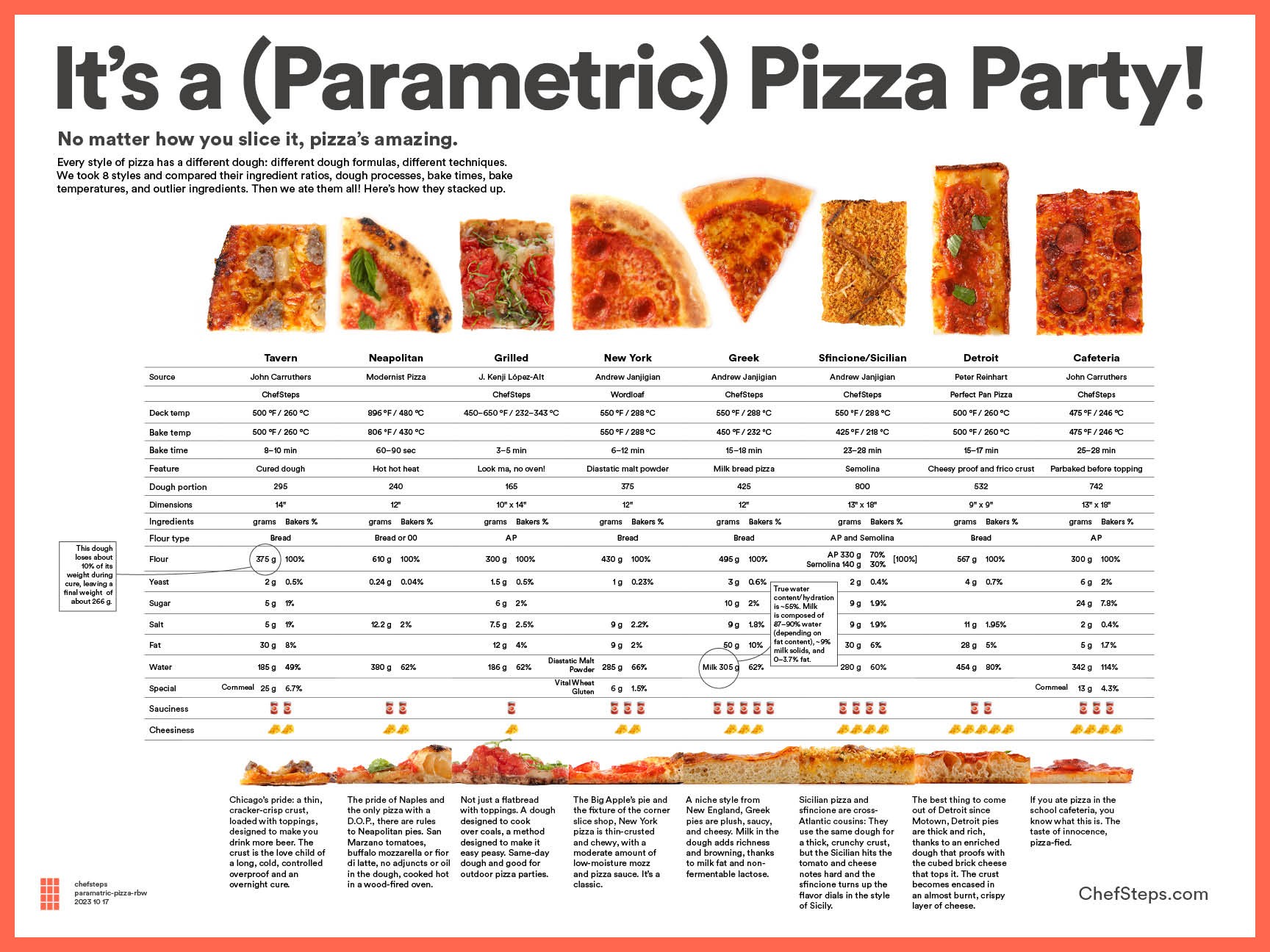 Pizza Doughs: A Parametric Analysis
 the Control Freak™ Home
 the Joule® Turbo Sous Vide
 the Joule® Oven Air Fryer Pro