Go to the Article: Know Your Knife
There is only one Knife to buy. Hands down the best bang for the buck and is an absolute joy for all chefs to use. Mac Knife MTH-80. So very sharp . A Mac ceramic steel works amazing with it. This is the last knife you will will ever own and you will look forward to using it everyday. The balance and maneuverability is so good! Enjoy
Funny on the Wakizashi.
Hi nuch. I have been asked this question a lot. I am an Architect, reformed foodie, "chef," and have worked at a very well known high end kitchen wares retailer in New York City and Beverly Hills. I specialized in knives, helping newbies just starting out in their home kitchen, seasoned profesional chefs working in well known fine dining establishments, and hunters. The answer to your question is . . . The knife that feels best to you! Everyone's hands are different. What works for me may not work for you, both physically and financially. Here's my suggestion. Go out and touch them. Go to stores, friends homes (not now, please stay at home), and see what is comfortable to you. Try 'em out. Don't let someone "tell you" what to buy. However, listen. This is all an education, both the good stuff and bad. But ultimately, buy the one that you are most comfortable with and have the best control of. Believe me, you will know. You also don't need to buy a set right away. You will probably find that "your" needs may be different than the set pre-packaged without you in mind. As you use your knives, you will definitely learn what you like and also what you might not. This is, as the saying goes, a journey and not just getting to the destination. What ChefSteps is doing here is spot on and I applaud them for this. Your world will open up, finding a new respect and empowerment as you refine your skills. And remember, knives aren't scary if you know how to use them and keep them sharp. Have fun!!!
Been using my Sabatiers for thirty years, love em, “guaranteed to rust” and they are UGLY and take a lot of work but I enjoy the quiet time w my knives and when properly handled are sharp and true. To eacH his own!
Ryusen
Hi I'm now based near you, would love to be able to learn from you. Sensei. Muito Obrigado
Actually you could have been correct(not Politically) in calling the Filet Knife a Fish Deboner or Deboning knife
But someone would probably make a joke about the former anyway
Thank you for your knowledge... Wow in Rio De Janeiro that must be an amazing experience for u....
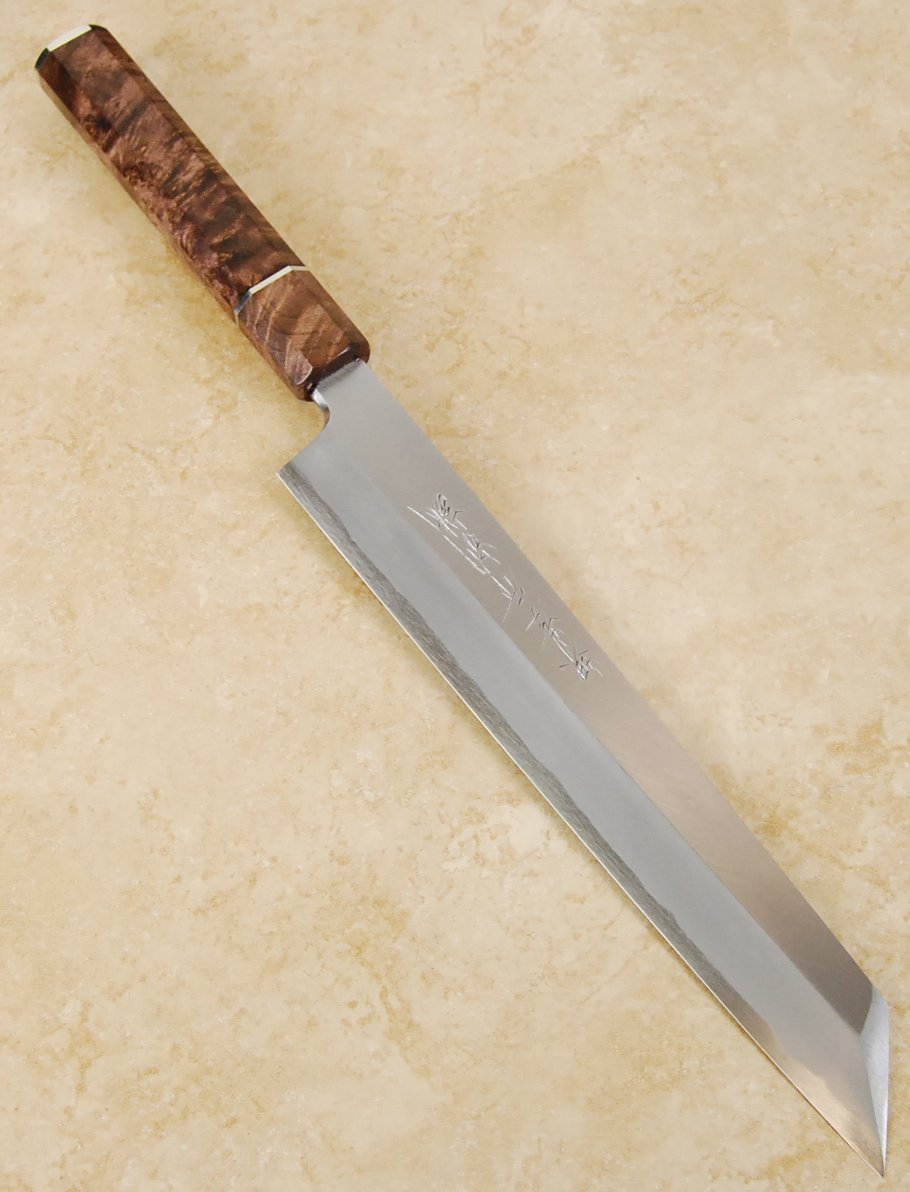
What brand are the knives in the title picture. Im very interested in buying them
Instant bro crush.
Hi everyone. Im Robert. Im American, working as a private chef in Rio de Janeiro. Im also a retired master Cabinetmaker and Woodworker and Im absolutely certain that I know a bunch about knives, and tools and sharpening them. Caring for edged tools (a chefs knives are most certainly tools) is an art learned over time. Simple care can be taught and learned quickly, but isnt the ultimate answer to the question. There are many different techniques and philosophy's on the subject and no one of them is the absolute answer. The real answer is time, experience and developing your own sense for what works. Every chef, just as every tool master has his own way of proceeding, but over time, again, they have developed their own techniques. As far as the tool itself, its a matter of choice, learned over time through experience. Why does a home cook need a high dollar chefs set? Answer, they dont, unless they want to. BUT, heres the big BUT... they should learn everything they can about the specific tool they own. material, pros, cons and the SPECIFIC CARE of that tool. Me, I have a $70. Chinese made chefs knife, SS and I love it. Its perfectly formed and I have all the top quality stones and a ceramic hone to care for it. It came with a paring knife and its perfect. It has a resin handle molded into the tang and is smooth as silk, but doesnt slip. Good for me, maybe not for you. But I bet I can sharpen it in 5 minutes enough to shave with. Thats me, maybe not you. I like the quality carbon knives... BUT THE CARE IS DIFFERENT! I can buy a cheap knife here for $7. that I can make perform as well as any of them, because I know ho to care for it. Softer steel, wont hold the edge for long, but I can get it back in action in about 2 minutes. Even if I dropped it on the floor. THATS ME, maybe not you. So, choose your weapon and get busy.
Unless your cutting down trees with those knives, there's no reason you should need to sharpen them every week. Or even every month. Use a honing rod after after every use, and you should only have to sharpen a couple times a year. 3-4 tops.
It's best to focus on the kind of steel that forge the blade, as it affect the sharpness and it's durability mostly (as mentioned by others here)
Japanese does made the best knife with very reasonable price in most range. Even a handmade black forged boat-shape/santoku (黑打舟行包丁/三德包丁)for domestic by local small workshop will surprise you. I'll suggest to have a look at Rakuten or eBay.
There is no such thing as the best brand. Personally, I stay away from the big name brands (although Shun and Global both make quality knifes). A knife is very personal item and therefore the best knife for you is up to you.
If seriously shopping for a knife, explore the web and forums while asking questions. You don't have to spend a ton of money either, but typically you get more in terms of finish (like a rounded spine) when you pay more. The first Japanese knife I bought was about $75 and I have done a bunch of work to it (because I wanted to, not because I had to). It is still one of my favorites, albeit the least expensive one I own.
what"s the best japanese knife brand?
Hi Chefsteps!! I would like to ask you guys if you know stores were I could find resonable pro knives in Miami and Orlando? Looking forward for Japanese brands and manufactoring. Thanks in advanced! take care!! and Congratulations for this fantastic web Page!!! It is the Best!
Hey ChefSteps, Have you ever thought of adding "quizzes" to your classes? Like multiple choice, t/f or fill in the blank quizzes. Something like the above print out but with blanks or a word bank that we could take as many times as we want and it would score us. I know that would help me learn a lot and could be applied to all sorts of your classes I would think. Just some food for thought. Y'all rock.
I have used stainless steel for years but in the last 5 or so I have chosen to go back to Carbon Steel, it is sharper, more durable and retains an edge longer than any of my classic German brand knives I owned. I spent over 10 years as well in the Marine Corps and every tool and knife I have ever used or owned was a carbon steel blade and for reason. I recently got rid of a lot of my older blades to several Culinary students that needs a great knife to get there careers started. but just to give you all some ideas I only use Japanese and my large bad is now down to a single roll. Take a look and you will see.
I am not trying to endorse but I am trying to make a clear distinction that stainless is good but carbon steel is better especially in a professional kitchen, when your tools count the most.
Yes. Santoku = "Three Virtues" (Chicken, fish, pork). Japanese knives are far more diverse than others, and each knife type is typically for a specific task or cut. The Japanese philosophy of cutting / preparation is different than here in the west -- the Japanese concept is that the cut is crucial to the end product. They are right.
Carbon is softer than stainless???? I own carbon knives with HRC67-68, which is VERY hard -- almost too hard. A good carbon knife will hold its edge as well as or better than stainless.
Frankly, you don't know what you're talking about. Spend some time on an actual KNIFE FORUM, learn about the knives and the steels.
I'm a working chef. Trust me, my knife technique is formidable. All of my best/sharpest knives are carbon. Stainless has its place, and will take a beating. But I've come across only one stainless knife which can give carbon a run for its money (No, I won't give a shameless endorsement here).
I use just two stones. 800 grit and 2000 grit. 4000 grit is used to put a mirror finish edge on knives, and I personally find that I cannot tell the difference in sharpness between a 2000 grit and 4000 grit finish. I generally go indefinitely many hours of work with a 2000 grit sharpened knife. I only revert back to 800 grit if I make a mistake and attempt to use a knife instead of a cleaver to process meats with bones.
I honestly am not a big fan of carbon (or Damascus) steel knives. Carbon steel is much softer than stainless, corrodes and stains easily, and requires much more care than stainless steel. While easier for novices to sharpen, carbon steel does not hold its edge near as well as stainless. Also carbon steel is more brittle than stainless unless it is fully annealed and not quenched, leading to chipping and fracturing under stress.
Colton, I would guess that you don't kneed to drop down to 600 each week. Try just the 4k or maybe just the 1k and 4k if the 4k alone takes too long. You can go through them all but that takes longer than necessary and it will take off more steel each time, shortening the life of your knife (but that's a decades issues).
I currently own these stones: 600 grit/800 grit/1000 grit/4000 grit. I don't have a problem with sharpening my knives, but just would like to know if taking my knives to all of them every week is bad in the long run?
I just want to make sure I'm taking proper care of my knives.
Thanks!
Colten
Added a new knife to my collection:
again, by Yu Kurosaki, who is now selling his knives under his own name (now famous). On this one, I had installed a custom handle made from Amboyna wood with a live edge at the end.
I have an other one to add to the list:
Usuba made by Kenichi Shiraki and sharpened by Hideaki Yamamoto, with a custom handle of red dyed mammoth tooth and African blackwood
And also 'Single-Beveled' knives are NOT very challenging even for beginners, I believe. And in addition, in Japan we use it mostly for preparing fish.
Although I just joined this community few hours ago, please, let me say something. 'Santoku' is not a type of knife for professionals. It is truly traditional, but wasn't created for professional kitchen. Actually for housewives, so that they don't need to get many kinds of knife for to change depending on the ingredients.
very nice guide, thank you for sharing all these information.
Interestingly, I don't see any Chinese "knives" here. I love my razor sharp chopper shape Chinese, have several of them, as well as a heavier, but similar shaped chopper, which I use on bones for stock etc. The good ones are easy rust carbon steel, you have to dry and oil them after using, but this is no problem. The high clearance handle makes slicing onions etc very easy, and you can use the large area of the knife to scoop up your slicings and move them easily.
That is pretty much my knives collection with a few more on the way!!! All maintained extremely sharp with my artificial stone (shapton), natural Japanese water stone and leather strop.
Toku Atsurai Hankotsus with ebony handle
And one of my first purchase, the extremely beautiful konosuke sakimaru with hybrid ebony handle!!
I didn't take these pictures, but I do own these knives:
a small petty made by the extremely skillful and young (for a blade smith) Yu Korosaki. This one is sold under the Masakage brand.
Of course, no knives collection would be complete without a Tanaka, nakiri in this case with ironwood handle.
and my only factory made knife, but still an amazing knife made by Miyabi with a Birchwood handle.
Shiraki yanagiba with custom handle made with maple burl dyed blue and blue mammoth tooth
This one is a treat:
Here is a kitchen blade made by sword maker Hiromune Takaba who earned his sword-making license in 1978. He is a member of the the Miyairi school of swordsmiths. Both he and his father are disciples of the living national treasure blacksmith Miyairi Kiyohira.
Forged Tamahagane with hand forged and folded nickel damascus, all hand forged by Mr. Takaba himself. He named it Ryu-un (flowing clouds ) as to how the damascus looks.
The colors reddish brown, white, black and blue shown in the Damascus pattern were intentionally applied by Mr. Takaba for making the Damascus pattern look more beautiful at the last stage of finish on blade surface, based on his own technique which he calls as "Iro-dashi" (coloring).
This is one of traditional techniques continued for more than 1,000 years called "Suminagashi"
The handle is custom made with 7000 years old bog oak and 15 000 years old mammoth tooth ferrule!!! talk about and old handle!!
Takeda AS Bunka with custom handle made with spalted maple burl dyed red/black
Takamura Uchigumo gyuto with custom red dyed maple burl and mosaic pins handle
Moritaka Sujihiki with custom box elder burl dyed red, buffalo horn and mammoth tooth handle
Hideo Kitaoka suminagashi deba with custom California buckeye burl wood handle
Kejiro Doi Kiritsuke with custom maple burl handle
Fujiwara nashiji guyto with custom koa and buffalo horn handle
One of my prized possession:
Hinoura River Jump santoku with custom mammoth tooth handle